
평등으로부터, 텍스트가 주는 힘은
무엇보다 강렬하다.
" From equality, the power that text provides is more powerful than anything else."
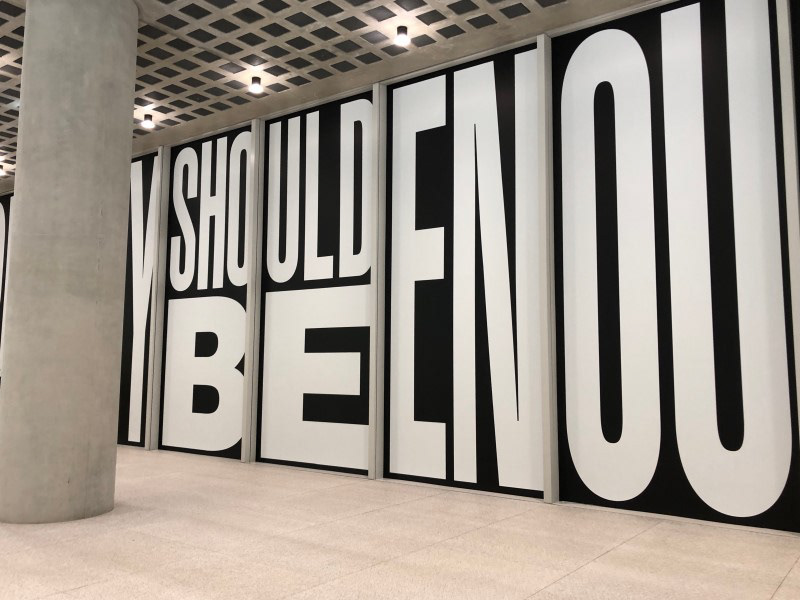
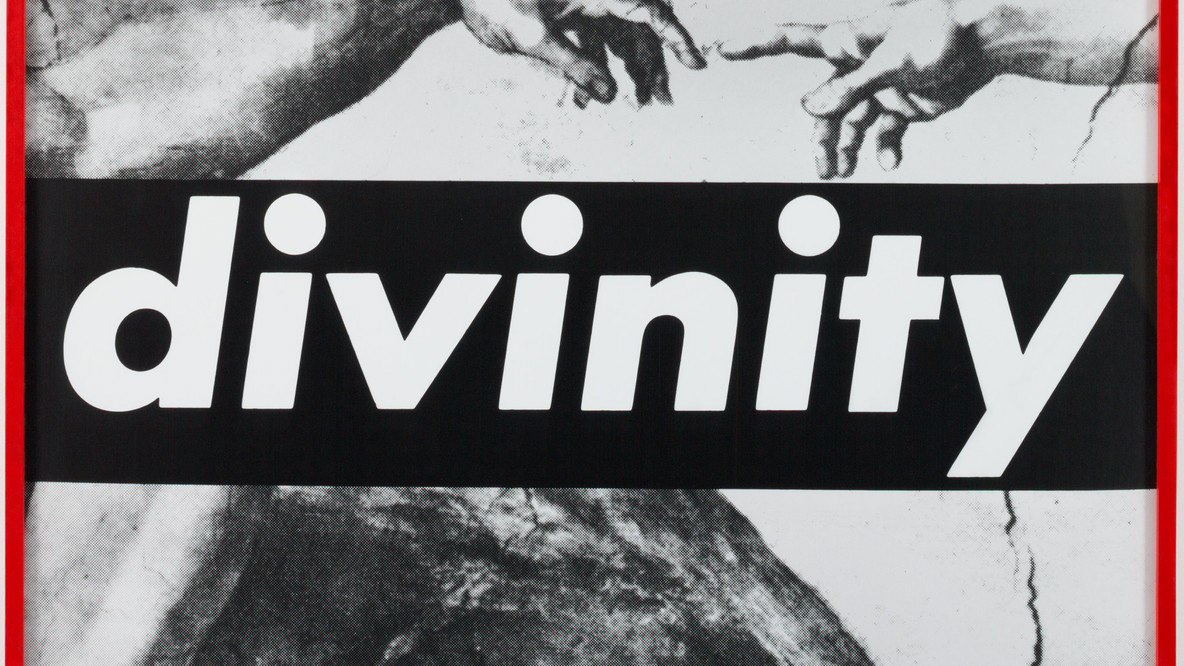
바바라 크루거(Barbara Kruger. 1945~ 미국)는 흑백 화면, 빨간색 박스, 하얀 색 텍스트로 구성한 매체작업으로 전 세계 시각문화의 트렌드를 주도하며 인간의 정체성을 다루는 개념 미술 작가이다. 1970년대에 작품 활동을 시작해서 현재까지도 활발히 활동하고 있으며. 그녀의 '텍스트 아트'는 남성·소비주의, 권력 문제를 날카롭게 겨냥해 페미니즘 미술의 거장으로도 우뚝 서 있다. 그녀의 작품을 보고있으면 The medium is the message라는 의견을 제시했던 Marshall McLuhan의 말을 참고하면 과연 어떤 매체가 되었던 강력한 텍스트의 힘은 그것을 뛰어넘을 수도 있는 증명을 나타내고 있다.
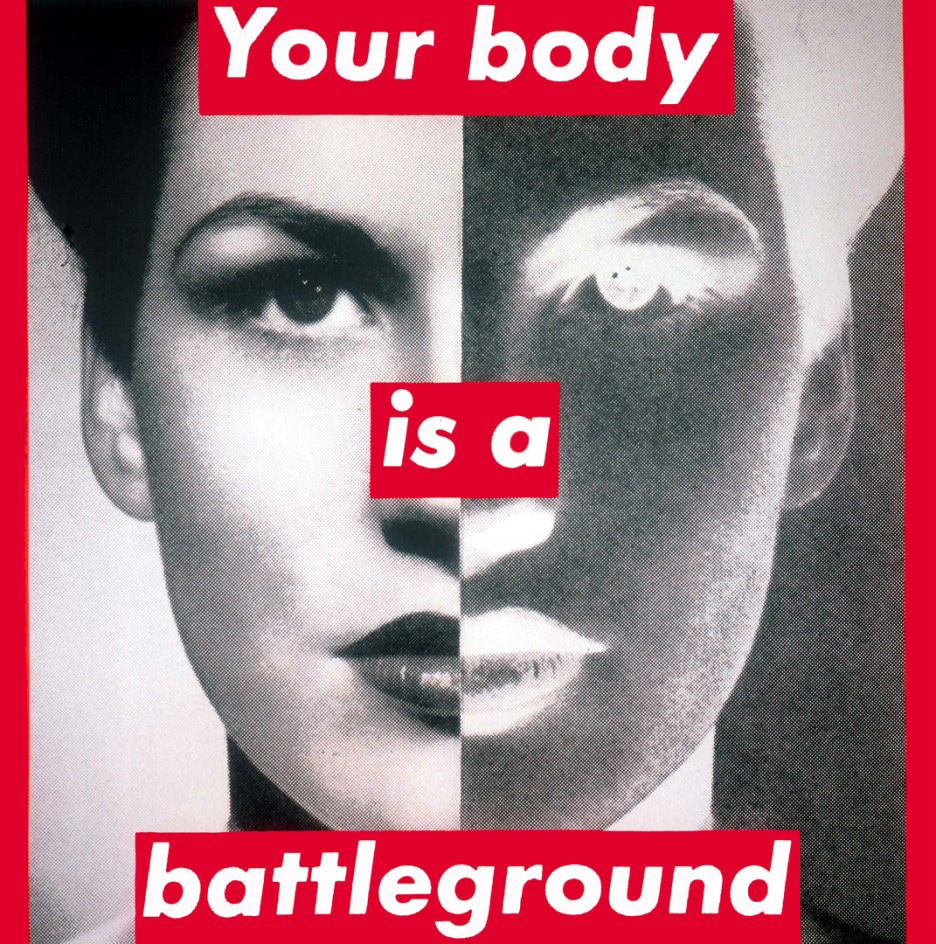
크루거는 사람들에게 다가가는 데 있어 대담하고 자유롭다. 강력한 이미지의 포스터는 한번본이상 머리속에 잊혀지지 않는다. 이런 직설적인 화법이 크루거의 주요 방식이다. 상당히 해박한 지식을 갖고 있음에도 불구하고(그녀의 최근 작품들은 버지니아 울프, 조지 오웰을 포함해 다양한 작가를 언급하고 있다) 그녀는 자신의 영향력에 대해 말하는 것을 꺼린다. “영감이라는 말은 저 같은 사람에겐 너무 화려한 단어예요.” “저는 보통 일상의 것들이 우리의 경험에 어떻게 녹아드는지를 연구해요.” 이런 이유로, 초반 작품은 박물관이나 미술관 같은 곳보다 공공장소에 전시하는 것이 더 어울려 보였다. “개인적인 미술 연습이 무엇인지는 잘 몰랐어요. 제가 아는 건 잡지를 만들고 TV를 보고 영화를 감상하는 것이었죠. 그래서 제 작품이 이런 대중적인 장소에서 기능을 발휘하는 것 같아요.” 그녀가 1980년대와 1990년대에 만들었던 광고판, 벽화와 커버를 가리키며 한 말이다. 이는 또한 당시의 상황에 대해 최대한 가시적으로 공격을 가하는 방법이기도 했다. 1989년, 이제는 그녀의 아이콘이 되어버린 워싱턴 여성행진(Women’s March)의 포스터 ‘당신의 몸은 전쟁터다(Your Body is a Battleground)’는 여성의 얼굴을 반으로 나누어 각각 포지티브와 네거티브 효과를 주었는데, 이는 낙태 합법화를 추진하는 시위자들의 상징이 되었다.
2012년 L.A에서는 12대의 시내버스를 이용해 지역 학교에서의 미술 교육을 장려했다. 작년에 뉴욕에서 열린 퍼포먼스 비엔날레 ‘퍼포마 17’과의 협업에서는 5만 개의 뉴욕 지하철 카드에 ‘누가 침묵하는가? 누가 말을 하는가?(Who is silent? Who speaks?)’와 같은 질문을 넣어 배부하기도 했다. 그 비엔날레에서 바바라 크루거는 처음으로 퍼포먼스 무대도 연출했다. ‘무제(The Drop)’라고 이름 지은 퍼포먼스에서 그녀의 트레이드마크인 푸투라 서체가 새겨진 제품을 반짝 세일하는 이벤트도 했다. 그러자 사람들이 소호 가게 밖에 줄을 서기 시작했다. 그 모습은 로고 디자인에 있어 크루거에게 적잖은 빚을 진 슈프림의 광적인 ‘드롭(발매)’이 이루어지는 매장 앞 광경을 떠올리게 했다.
"Barbara Kruger (1945~ USA) is a conceptual artist leading global visual culture trends with her media works composed of black-and-white screens, red boxes, and white text. She explores the concept of human identity. Starting her artistic activities in the 1970s, she remains active to this day. Her 'text art' sharply targets issues of masculinity, consumerism, and power, establishing her as a master of feminist art. When viewing her works, one can see evidence that the power of strong text transcends the medium, echoing Marshall McLuhan's statement, 'The medium is the message.'
Kruger is bold and free in approaching people. Her powerful image posters are unforgettable once seen. This direct style of expression is Kruger's primary method. Despite possessing considerable knowledge (her recent works mention various authors including Virginia Woolf and George Orwell), she avoids discussing her influence. "The word 'inspiration' is too flashy for someone like me," she says. "I usually study how everyday things blend into our experiences." For this reason, her early works seemed more suited to be exhibited in public places rather than places like museums or art galleries. "I didn't know what personal art practice was. I knew how to make magazines, watch TV, and enjoy movies. So it seems like my work functions better in these popular places," she explains, referring to billboards, murals, and covers she created in the 1980s and 1990s. This was also a way to attack the situation as visibly as possible. In 1989, the poster for the Washington Women's March, now her icon, 'Your Body is a Battleground,' divided a woman's face in half, giving each side positive and negative effects. This became a symbol for activists advocating for the legalization of abortion.
In 2012 in L.A, she managed art education in local schools using 12 city buses. In collaboration with the 'Performa 17' performance biennale held in New York last year, she distributed questions like 'Who is silent? Who speaks?' on 50,000 New York subway cards. In this biennale, Barbara Kruger directed a performance stage for the first time. In the performance named 'The Drop,' she held an event where products engraved with her trademark Futura font were dazzlingly on sale. People started lining up outside the SoHo store. This sight reminded observers of the Supreme brand's fervent 'Drop' events happening outside their stores in logo design."
About Her Life
잡지사의 광고 디자이너로 일했던 그녀, 학사 학위도, 정식 예술 교육도 없이 미술계에 발을 들인 여성에게는 도전적인 프로젝트였다. 크루거는 파슨스 디자인 학교를 한 학기 다닌 후 학위를 포기하고 1960년대 후반 콘데 나스트의 <마드무아젤> 매거진에서 디자이너로 일했다. 그녀는 돌이켜보니 이 일자리를 얻은 것이 운이 좋았다고 말한다. “그 당시엔 콘데 나스트와 허스트 사가 여성이 일다운 일을 할 수 있는 곳이었어요. 남자 상사에게 커피를 타주는 일 말고 진짜 일이요.” 그럼에도 한편으로는 물질주의 사회를 지지하는 일을 하는 것에 대해 갈등을 느끼고 있었다. “많은 고객들이 추구하는 완벽함에 맞출 자신이 없었어요.” 그녀는 그래픽디자인을 그만두고, 예술작품(초기에 만든 것은 여러 재료를 엮어 만든 벽걸이 장식품이었다)을 만들고 건축물 사진을 찍기 시작했다. 시집을 출판하기도 했다. 1980년대 초반은 그녀가 모던 콜라주 양식을 도입하고 적용하는 실험적인 기간이었다.
초기 작품은 대부분 그녀가 일했던 잡지사에 대한 환멸감을 드러낸 것이었다. 도발적인 슬로건을 주요 이미지와 배치함으로써 그녀는 매스미디어에 통용되고 있던 문장들을 재창조하려고 시도했다. “나는 쇼핑한다, 고로 존재한다(I shop therefore I am)”라는 역설적인 문장이 1987년 그녀의 실크 스크린 인쇄 작품에 등장한다. 상업성과 철학을 섞어 현대사회가 소비주의라는 거짓된 신을 숭배하는 것을 강렬하게 비판한 것이다.
트럼프 정권과 낙태 합법화를 반대하는 단체 아래서 이러한 포스터를 똑바로 쳐다보기는 어려울 것이다. 크루거는 여전히 혼란스러운 시기에 깊은 울림을 보내며, 우리가 당시보다 못한 삶을 살도록 만드는 사람들을 경멸한다. “좋았던 시절이란 없어요. 여성이나 유색 인종에겐 30년 전이나 지금이나 상황이 똑같아요. 좋았던 시절이라 부르는 이유는 그 당시가 정말로 좋았기 때문이 아니라, 우리가 현재 살아서 그러한 상황을 겪고 바꿀 수 있게 되었기 때문이에요.” 그녀는 자신이 가진 개혁의 힘에 대해서 겸손하다. “예전에 사람들은 제 작품을 보고 체제전복적이라고 했어요. 하지만 저는 그렇게 생각하지 않아요.” 자칭 변화에 저항하는 자들의 허영심이 결국 사회적 보수주의의 확산을 막지 못했다는 점을 강조하는 것이다. “자신이 옳은 생각을 한다고 믿는 사람들을 보면 맥이 빠져요. 세상은 나르시시즘에 빠진 그들의 양심보다 훨씬 크고, 야심 있고 지적인 그들의 말보다도 훨씬 커요.” 트럼프에게 승리를 내준 민주당의 ‘부실한 선거운동’을 언급하며 그녀는 말했다. “생각과 언어를 사람들에게 다가가는 수단으로 쓰지 못한다면, 현재 우리에게 주어진 것에서 크게 벗어나지 못할 거예요.”
"For her, working as an advertising designer for a magazine, stepping into the art world without a bachelor's degree or formal art education was a challenging project. After attending Parsons Design School for a semester, Kruger abandoned her degree and worked as a designer at Conde Nast's <Mademoiselle> magazine in the late 1960s. Looking back, she says getting this job was lucky for her. 'At that time, Conde Nast and Hertz Saga were places where women could do proper work. It was real work, not just making coffee for male bosses.' However, she felt conflicted about supporting a materialistic society. 'I didn't have the confidence to fit into what many clients were pursuing, perfection.' She quit graphic design and started creating artworks (initially wall decorations made by combining various materials) and taking architectural photographs. She even published a book. The early 1980s were an experimental period for her when she introduced and applied the modern collage form.
Most of her early works revealed her disillusionment with the magazine she worked for. By incorporating provocative slogans into key images and layouts, she attempted to recreate sentences prevalent in mass media. The paradoxical sentence 'I shop therefore I am' appears in her silk-screen print in 1987. It strongly criticized modern society's worship of the false god of consumerism by mixing commercialism with philosophy.
It might be difficult to face these posters directly under the Trump administration and anti-abortion groups. Kruger still sends deep resonances in these confusing times and disdains those who make us live worse than before. 'There were no good times. The situation is the same for women or people of color, whether it's 30 years ago or now. The reason people call it a good time is not because it was really good back then, but because we are living now and have the power to experience and change such situations.' She is humble about the power of reform she possesses. 'In the past, people called my work regime-subversive. But I don't think so.' She emphasizes that the vanity of those resisting change eventually did not prevent the spread of societal conservatism. 'Watching people who believe they have the right thoughts is exhausting. The world is much bigger than their conscience immersed in narcissism, and much bigger than their ambitious and intellectual words.' Mentioning the Democratic Party's 'ineffective election campaign' that gave Trump a victory, she said, 'If you can't use your thoughts and language as a means to reach people, you won't deviate much from what we already have.'"
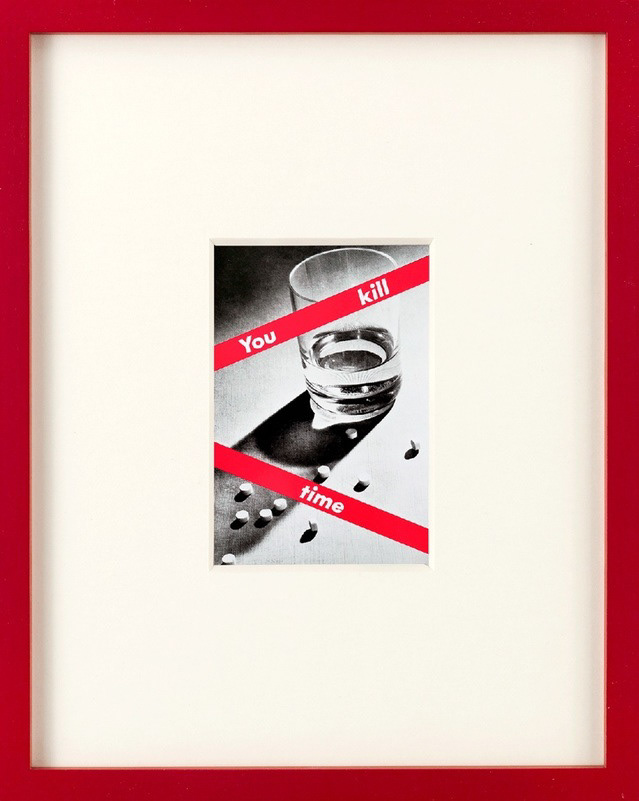
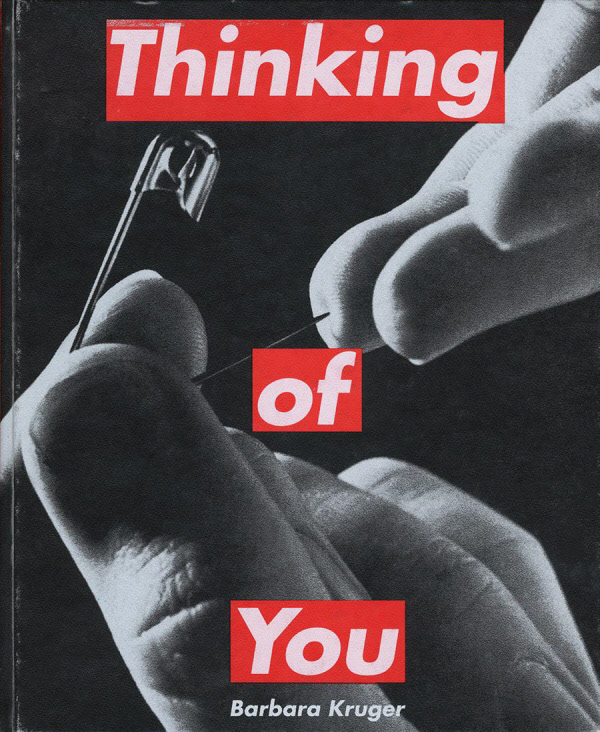
Think of you
'Think of You(당신 생각)1999~2000' 은 안전핀이 집게손가락을 찌르는 순간을 클로즈업 한 사진 이미지 위에 "당신을 생각한다"라는 문구를 겹쳐놓은 작품이다. 대담하고 단순화된 구성인 그녀의 시그니처 스타일로 이 작품 역시 빨간색 프레임에 들어있다. 이 작품의 이미지에는 삶의 맹점에 대한 그녀의 경고가 들어 있으며 텍스트에는 그에 대한 우려가 배어있다. 크루거의 예술은 언제나 삶의 무의식적 필요와 욕망을 향해 승화된 슬로건으로 비판과 신중함을 담는다.
The artwork 'Think of You (당신 생각) 1999~2000' features a close-up photograph of a safety pin pricking a fingertip, with the text overlaid, '당신을 생각한다' (I think of you). Boldly and simply composed in her signature style, this piece is also encased in a red frame. The image of this work contains her warnings about the pitfalls of life, and the text reflects concerns about them. Kruger's art always combines criticism and caution with slogans that are elevated towards the subconscious needs and desires of life.
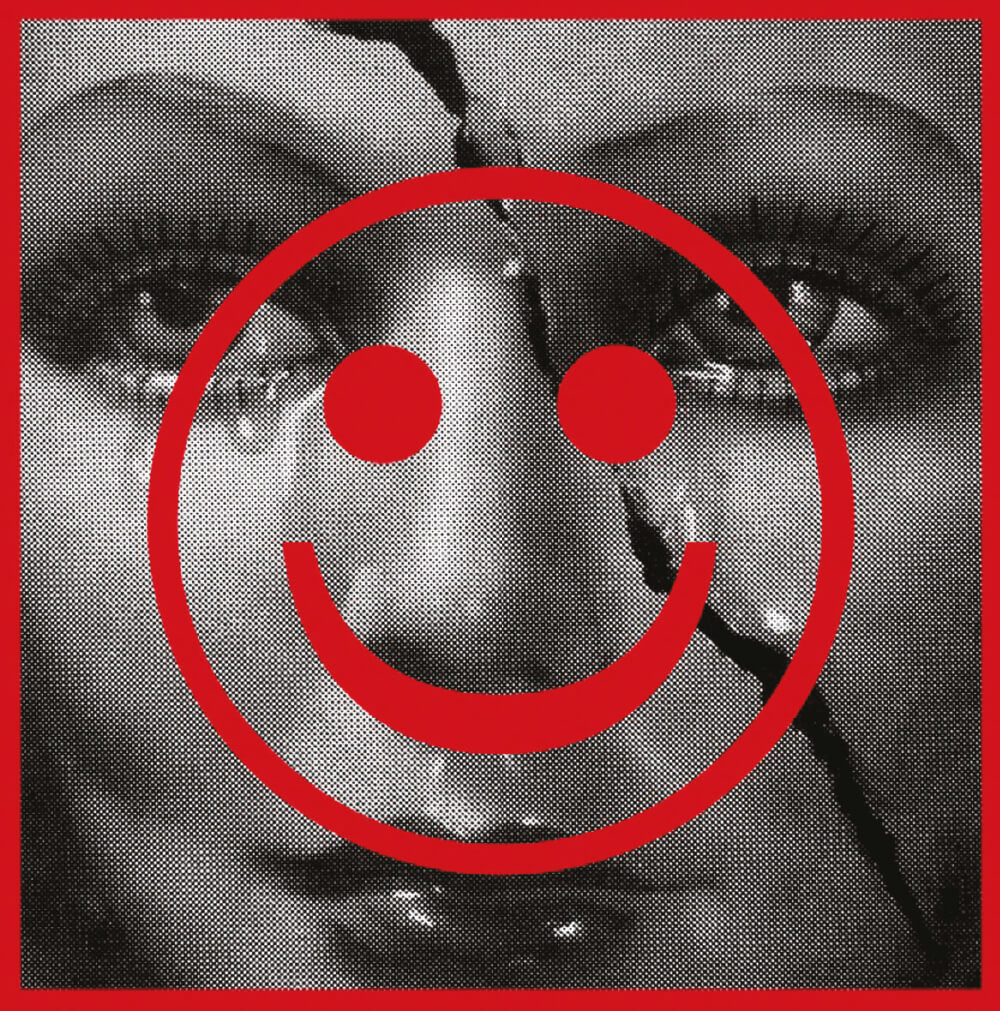
No Complaints, except for the world
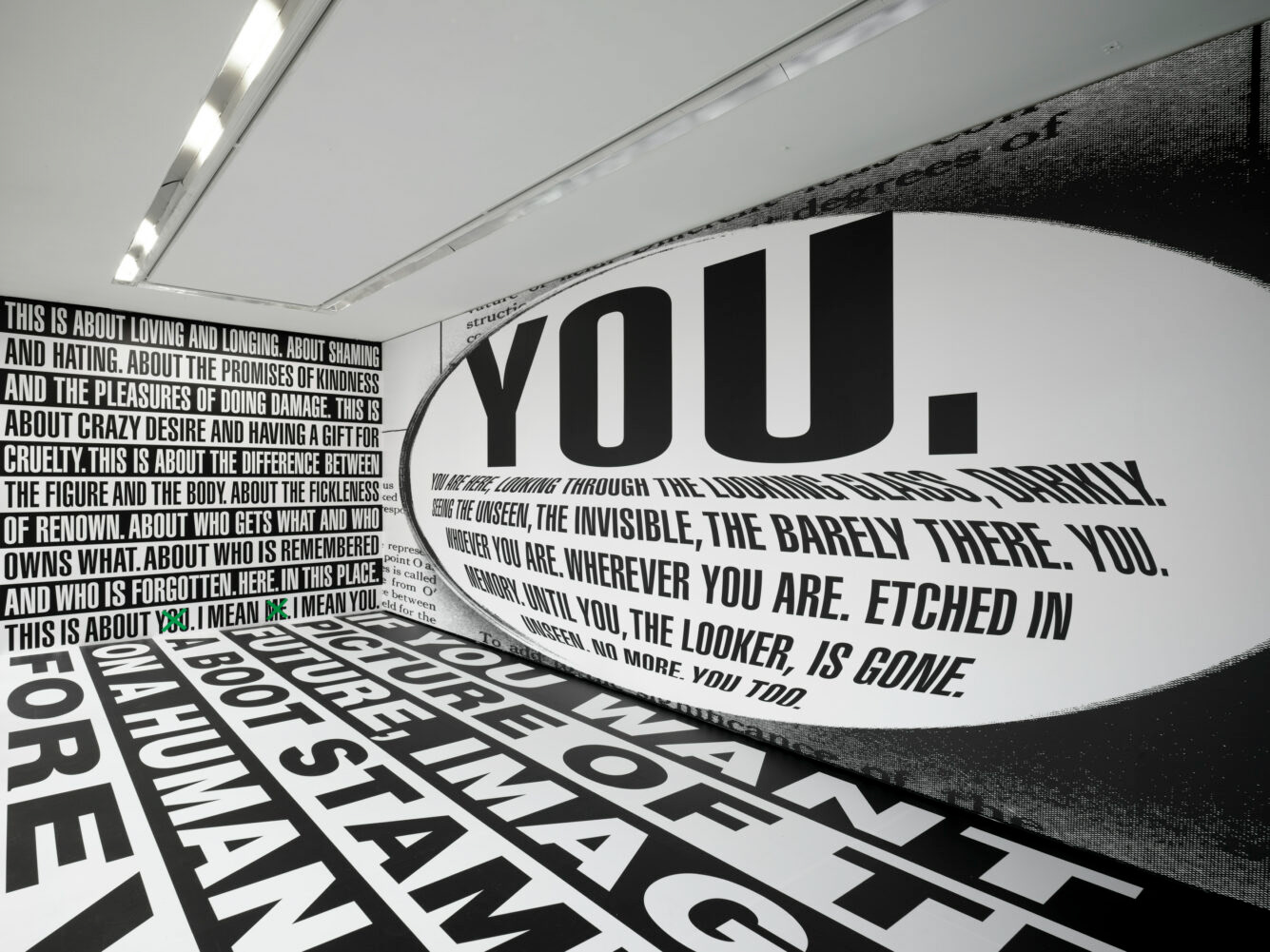
"불만은 없습니다, 세상에 대한 불만 외에는요"그녀의 모든 말은 작품처럼 간결하고 함축적이다. 말을 낭비하지도 두리뭉실 말하지 않는 명확한 핵심을 집어주는 명쾌함이있다. 흑백 사진과 함께 빨간 직사각형 배경에 하얀 푸투라 또는 헬베티카 서체로 쓰인 문구는 수많은 모방한 표절이 양산되는 것을 감수해야 했지만, 이미지와 텍스트의 조합으로 시선을 사로잡는 그녀의 경고의 문구들은 대중의 영역에 스며들어 보편적인 문화로 자리 잡았다. 길에서 마주치는 버스에 빌보드에 붙혀진 그녀의 말들은 보는 사람들로 하여금 시민으로서의 의식을 되돌아보도록 자극함으로써 그 의미로써 대단한 영향력을 발휘한다. 이를통해 더 넓게는 광범위한 제도적 변화를 유도한다. 예술이란, 결국 삶과 밀접하게 관련있는 것일까?
크루거는 . “우리가 서로 연결되어 있는 방식, 이와 관련한 작품을 만들고 싶습니다. 흠모와 경멸, 상처와 사랑에 관해서요.” 이 말 속에 지혜와 겸손함, 그리고 단순함에 담긴 위대함이 있다.바바라 크루거 특유의 대담하고 도발적인 예술로 세상에 메시지를 던졌다. 그리고 오늘날에도 여전히 사회 현상에 대해 도전적인 목소리를 내고 있다.
'I have no complaints, except for complaints about the world,' all her words are as concise and condensed as her works. There is a clarity that does not waste words, delivering a clear core without being vague. Despite having to tolerate numerous imitations and plagiarisms of phrases written in white Futura or Helvetica fonts against a red rectangular background alongside black and white photos, her warning phrases that capture attention through the combination of image and text have permeated into the public domain, becoming part of the universal culture. Her words on billboards attached to buses encountered on the street prompt viewers to reflect on their consciousness as citizens, exercising significant influence in terms of their meaning. Through this, she encourages broader systemic changes. Is art ultimately closely related to life?
Kruger states, 'I want to create works that relate to the ways in which we are connected to each other. It's about admiration and contempt, pain and love.' In these words, there is greatness embedded in wisdom, humility, and simplicity. Barbara Kruger threw messages into the world with her characteristic bold and provocative art. Even today, she continues to voice challenging perspectives on societal phenomena."